
Being more present while traveling
Learn how to slow down, reduce distractions, and experience your trips more deeply by being fully present while traveling.
How to Stay Present During Your Trip
Being more present while traveling does not mean doing less. It means experiencing better.
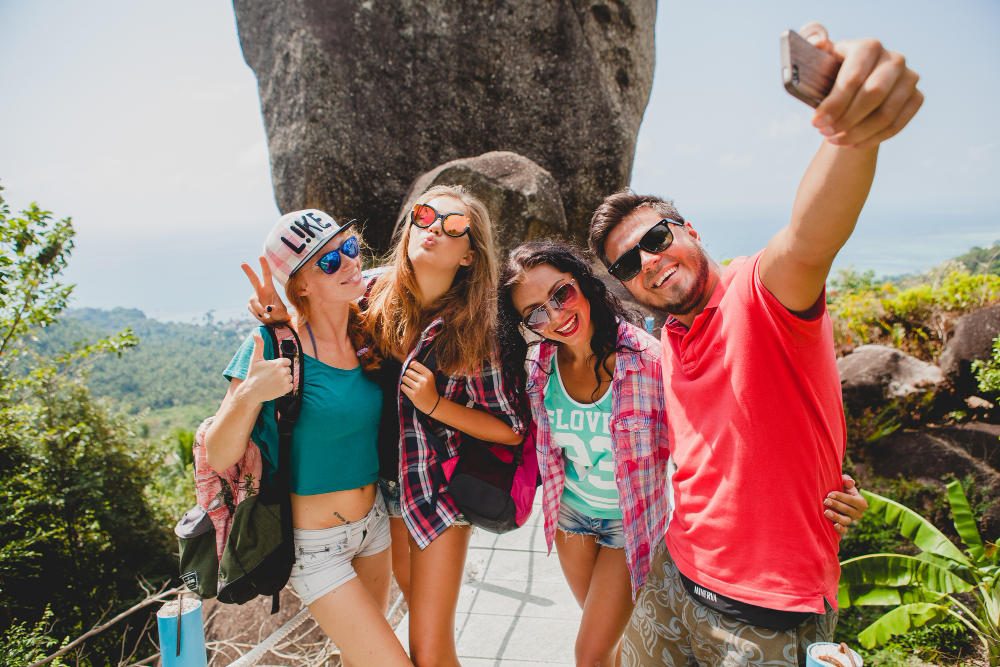
It means stepping out of autopilot mode—the one where you simply follow the itinerary—and entering a conscious mode, where you truly absorb the place you’re in.
The overload of stimulation in American travel
In the United States, the scale is impressive.
Cities like New York City, Las Vegas, and Los Angeles offer constant stimulation: lights, sounds, advertisements, crowds, and events.
National parks like Grand Canyon or Yosemite National Park deliver landscapes so grand that the natural tendency is to try to capture everything.
The problem isn’t abundance. It’s how we react to it.
When you try to consume as much as possible, your mind is always a few steps ahead: What’s the next stop? How much time is left? Can we fit in one more attraction?
The addiction to documenting
One of the biggest barriers to being present is the need to record every detail. Photos, videos, stories, and updates.
You’re not watching the sunset—you’re framing the sunset.
There is nothing wrong with preserving memories. The issue arises when documentation replaces experience.
Try a simple rule: at every major attraction, take a few quick photos and then put your phone away for ten minutes.
Observe the people, the sounds, the weather, and the smell of the environment. That small pause completely changes your perception of the trip.
Less rushing, more depth
The average traveler underestimates the impact of movement. In the U.S., distances are long. An itinerary that looks feasible on paper can turn into hours in traffic or at the airport.
Instead of trying to visit five neighborhoods in one day, choose two and explore them slowly. Sit in a local café. Walk without a destination through a few streets. Step into an independent bookstore.
Mindfulness in small experiences
Not every powerful memory comes from a famous landmark. Sometimes the strongest moment of a trip is a quiet breakfast, an unexpected conversation, or a walk at sunset.
But that only happens if you allow space for contemplation.
Presence requires intention. Ask yourself, “Am I really here, or am I just passing through?”
Smart planning reduces anxiety
Interestingly, being present begins before the trip. Good planning reduces uncertainty and frees up mental space to enjoy the moment.
When you already know how to get to your hotel, how long it takes between attractions, and where you plan to have dinner, your mind doesn’t remain in a constant state of alert.
That lowers operational anxiety and increases your ability to absorb the experience.
Planning does not eliminate spontaneity; it creates security so that spontaneity feels enjoyable rather than chaotic.
Limit information consumption during the trip
Many travelers continue researching attractions even after arriving at their destination. At every break, they open reviews, blogs, and comparison videos.
This constant search for “the best option” creates ongoing dissatisfaction. You are always comparing what you are experiencing with something potentially better.
Choose in advance and, during the day, commit to your decision. The quality of your experience improves when you stop second-guessing your own itinerary.
Create micro-rituals of presence
You don’t need to meditate for an hour to be present. Small rituals help:
- Start the day without your phone for 20 minutes.
- Consciously observe the environment when you arrive in a new city.
- When sitting down to eat, wait a few seconds before taking photos.
- Take a short walk without a defined destination.
The trap of “making the most of it”
There is strong cultural pressure to “make the most of every minute.” Especially on international trips, you may feel the need to justify the investment by seeing as much as possible.
But quantity does not guarantee quality. You can spend three intense days in Washington, D.C., visiting every possible museum and still feel that everything was superficial.
Sometimes visiting fewer places and dedicating more time to each creates stronger memories.
The emotional impact of presence
When you are truly present, travel stops being the consumption of attractions and becomes a lived experience.
Memory becomes richer and more sensory. You remember the cold wind, the smell of food, and the sound of the streets.
It also reduces the common post-trip feeling that “it went by too fast.” Often it wasn’t fast—it was automatic.
Presence expands your perception of time.
Related content
Exploring cities without rushing
Discover how slowing down transforms city travel into deeper, stress-free experiences across America’s most vibrant destinations.
Keep reading * You will remain on the current website