
How to avoid peak-hour travel stress
Learn how to avoid peak-hour travel stress in major U.S. cities with smart planning, better timing, and strategic transportation choices.
Minimizing Stress During Peak Travel Times
Traveling across the United States is an intense experience. In major cities like New York, Los Angeles, Chicago, or Miami, there’s one factor that can turn a promising day into unnecessary strain: rush hour.
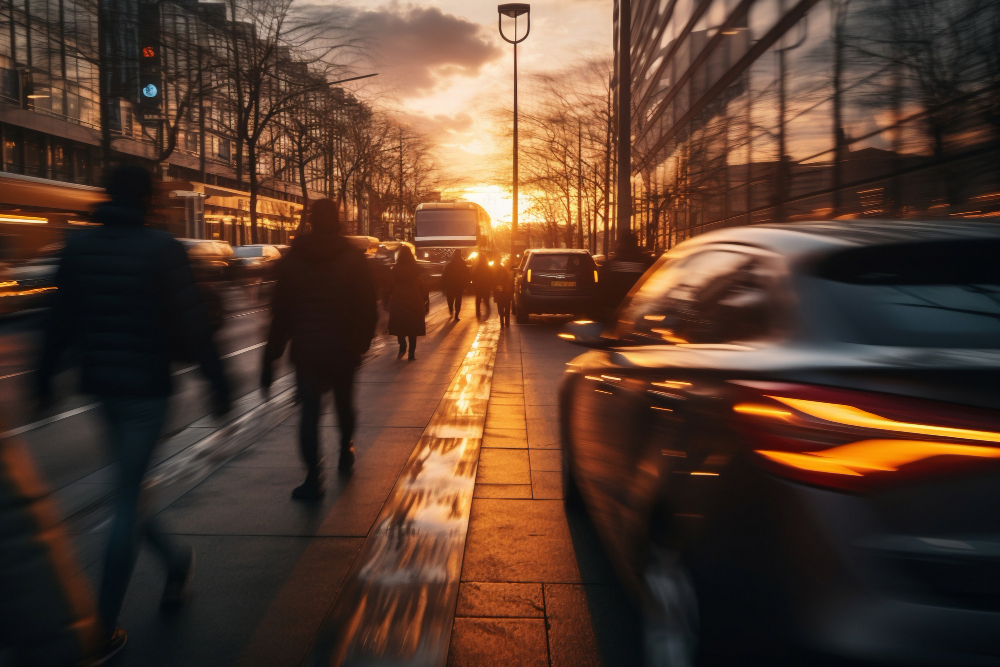
Avoiding peak-hour stress isn’t just about comfort. It’s strategy. And above all, it’s a way to protect your energy for what truly matters on a trip: living the experience.
Understand what “peak hour” means in the United States
Rush hour typically happens between 7:00 and 9:00 a.m. and between 4:00 and 7:00 p.m., Monday through Friday.
These are the times when workers commute to offices, schools, and business centers.
If you’re a tourist, competing with this daily flow is rarely worth it.
Plan your movements outside critical hours
The simplest rule is: go earlier or go later.
If you plan to visit popular attractions, leave before 7:00 a.m. or after 10:00 a.m. Museums, parks, and observation decks are usually quieter during their first hour of operation.
Besides shorter lines, you’ll find more comfortable transportation.
In the late afternoon, try to avoid long commutes between 4:00 and 7:00 p.m. If you’re in Manhattan, for example, stay within the same area during that period.
Choose accommodations with geographic intelligence
Many travelers choose hotels based only on price. But in the United States, location directly impacts stress levels.
Staying close to the attractions you plan to visit reduces reliance on transportation during peak hours.
In New York, choosing Midtown can make walking easier. In Orlando, staying inside or near the parks reduces road travel during the busiest early hours of the day.
Use technology to your advantage
Apps like Google Maps and Waze provide real-time traffic forecasts.
Before leaving your hotel, check the map. Often, delaying your departure by 30 minutes can drastically reduce travel time.
For public transportation, local apps such as MTA in New York or CTA in Chicago provide updated schedules.
Monitoring these variations helps you decide whether it’s better to wait, change routes, or choose another mode of transportation.
Reduce the number of daily cross-city trips
A common mistake travelers make is building fragmented itineraries: crossing the city multiple times in a single day to “see everything.”
In large cities like Los Angeles, this can be exhausting. Hollywood in the morning, Santa Monica in the afternoon, Downtown at night—all of this may involve heavy traffic depending on the hour.
Organize your itinerary by region. Dedicate specific days to specific areas of the city. This reduces long commutes and minimizes the impact of rush hour.
Adapt your pace to the city’s style
Each American city behaves differently.
- New York is fast-paced. The flow is constant. Walking quickly is part of the urban rhythm.
- Los Angeles is car-dependent and structurally prone to traffic.
- Chicago combines an efficient subway system with heavy congestion along certain corridors.
Understanding this dynamic prevents frustration. Don’t try to impose an idealized rhythm on the city. Adjust your planning to local reality.
Consider alternative transportation
In some situations, walking may be faster than driving. In Manhattan, for example, short distances are often more efficiently covered on foot than by taxi during rush hour.
Shared bike systems, such as Citi Bike in New York, can be a smart alternative outside the most congested avenues. In Washington, D.C., the subway system is efficient for avoiding surface traffic.
Avoid airports during critical hours
If possible, schedule flights outside early morning and late afternoon windows. Airports like LAX, JFK, or O’Hare become even more congested during those times.
Arriving at the airport during rush hour can double your estimated travel time. In addition, security and check-in lines tend to be longer.
If your flight is unavoidably early, consider staying near the airport the night before.
Include strategic breaks in your itinerary
Stress doesn’t come only from traffic. It’s cumulative. Crowds, constant noise, long lines, and tight schedules drain energy.
Include pauses in your day. A lesser-known park. A café outside tourist areas. A short rest at the hotel.
In cities like Boston or Seattle, exploring residential neighborhoods can be an efficient way to escape the intensity of central districts. These breaks help regulate your emotional rhythm.
Manage expectations
Part of peak-hour stress comes from frustration with delays. When you expect total fluidity in cities that host millions of people daily, you create an unrealistic scenario.
Accepting that congestion is part of the American urban experience is an important step. The goal isn’t to eliminate traffic entirely—it’s to minimize its impact on your trip.

Related content
Managing expectations for popular destinations
Learn how to manage expectations when visiting popular U.S. destinations and avoid frustration with crowds, lines, and high costs.
Keep reading * You will remain on the current website