
Making airport time less stressful
Practical strategies to reduce airport stress, improve decision-making, and create a calmer, more controlled travel experience.
Smart Strategies for a Stress-Free Airport Experience
Spending time at the airport is inevitable for anyone traveling within or outside the United States.
The difference between a chaotic experience and a controlled one isn’t the airport itself—it’s you.

So here’s a different approach: instead of trying to “avoid stress,” structure your airport time as a sequence of smart decisions.
1. Leave home mentally organized
Airport stress rarely starts there. It usually begins before you leave the house.
If you wake up late, repack your suitcase at the last minute, rush to print documents, or book transportation at the last second, you arrive at the airport already in urgency mode.
Define three things before leaving:
- Keep your ID accessible and separated.
- Update the airline app.
- Have a clear plan for getting to the airport (car, Uber, or train).
2. Break the airport into stages, not chaos
A common mistake is seeing the airport as one giant block of anxiety. In reality, it has clear stages:
- Arrival
- Check-in / baggage drop
- Security
- Walking to the gate
- Waiting for boarding
When you treat each stage as an isolated mission, the environment becomes more predictable.
3. Reduce unnecessary variables
Every extra variable increases stress potential. Oversized luggage, non-compliant liquids, and scattered documents all amplify discomfort.
If possible, travel with carry-on only. At busy airports like Orlando International Airport during vacation periods, checking bags can add 30 to 60 minutes to the process.
Fewer items = fewer failure points.
4. Security doesn’t have to be a battle
Security is where many travelers lose emotional balance.
Programs like TSA PreCheck help, but even without them, you can act strategically.
Wear shoes that are easy to remove. Keep your laptop accessible. Observe the rhythm of the line before reaching the conveyor belt.
Don’t turn a standard procedure into a personal conflict. The staff repeats the same process hundreds of times a day.
5. At the gate? Change your pace
Here’s what many people overlook: once you arrive at the gate early, tension shouldn’t stay high.
If you’ve cleared security and located your gate, the critical phase is over. Now you transition.
Instead of standing and checking the screen every five minutes, confirm the boarding time and activate app notifications.
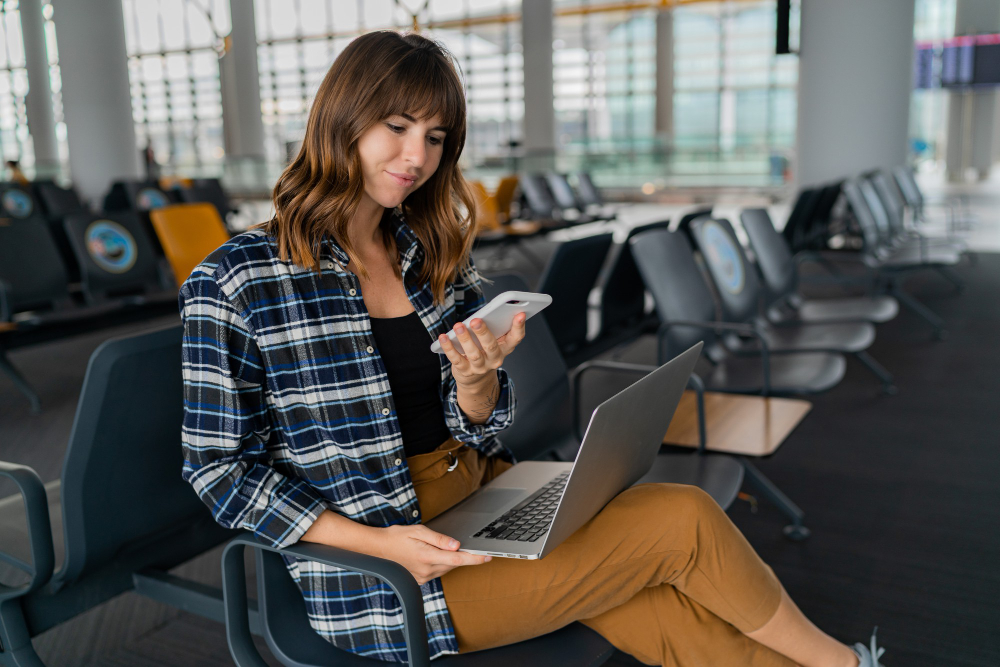
Then sit down. Breathe. Relax. Staying tense won’t speed up boarding or change anything else—so deliberately slow down.
6. Turn waiting into productive time
Stress increases when we feel like we’re “wasting time.”
Decide in advance how you’ll use that period: Reply to emails? Organize your itinerary? Read something meaningful? Or simply rest?
On business trips, using airport time as a focused work block can reduce pressure upon arrival.
On leisure trips, the smartest choice might be doing nothing at all—but make that a conscious decision.
7. Food and hydration are invisible factors
Irritability is often disguised hunger.
Bring a light snack if allowed. Set aside money to buy water after security, even if it’s more expensive.
One tip that makes a big difference: avoid overdoing alcohol before your flight. Traveling with a hangover is never a good idea.
8. Manage expectations, not just schedules
Delays happen. Gate changes happen. The traveler who treats every adjustment as a personal failure suffers more.
A more productive mindset:
“This is part of the process.”
“What’s the next best decision?”
Control what’s controllable. Accept what isn’t.
9. Children require extra planning
If you’re traveling with kids, the airport is not the place to improvise.
- Explain the process beforehand.
- Create small “missions.”
- Bring offline entertainment.
Airports like Phoenix Sky Harbor International Airport may be spacious, but long unstructured waits increase exhaustion and tension.
10. Create your personal airport ritual
Instead of treating each trip as a completely separate event, develop a repeatable system.
- Always arrive with the same time margin.
- Always organize documents the same way.
- Always go through security using the same method.
- Always define how you’ll use waiting time.
Routine reduces mental load.
Related content
What to know before flying during peak seasons
Smart strategies for navigating peak season flights in the U.S. Reduce delays, stress, and costly mistakes with better planning.
Keep reading * You will remain on the current website