Smarter packing for domestic travel
Learn how to pack smarter for domestic travel in the U.S., reducing stress, saving space, and making trips smoother and more efficient.
Packing smarter for stress-free domestic travel
Traveling within the United States often feels simple—and in many ways, it is. Still, one of the biggest sources of stress on domestic trips continues to be luggage.
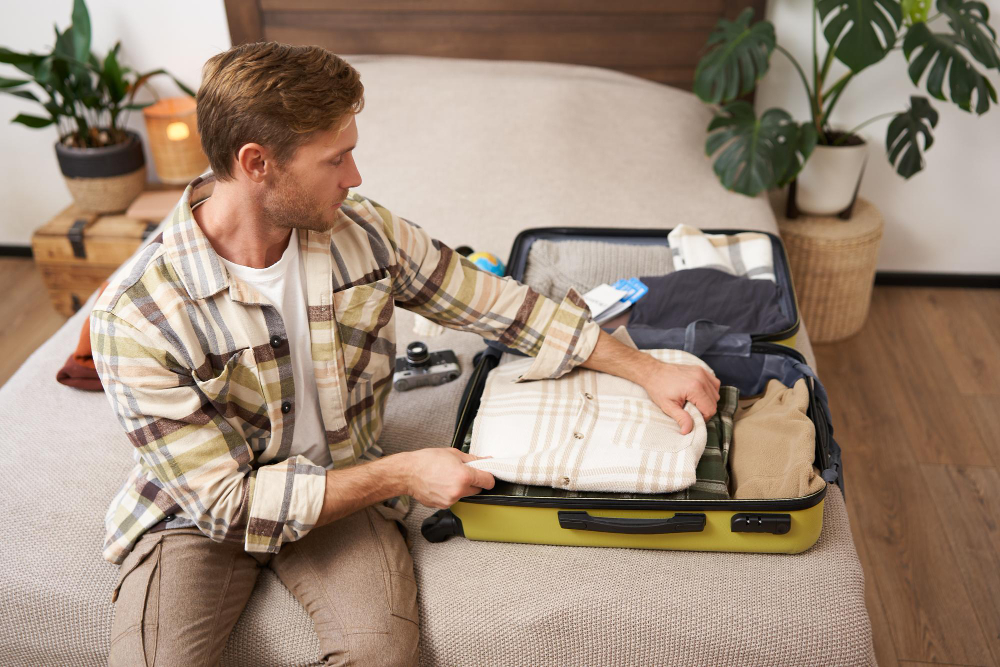
Packing too much, packing too little, or packing the wrong things directly affects pace, comfort, and even decision-making during the trip.
Understand the trip context before packing
Before thinking about clothes or specific items, it helps to answer a few basic questions:
- How many days will I be away?
- Will I be changing hotels or staying in one base?
- Will most transportation be by car or plane?
- Will I have easy access to laundry or stores?
Prioritize versatility, not quantity
One of the most important principles for traveling better within the U.S. is choosing versatile pieces. Instead of thinking in terms of “complete outfits,” think in combinations.
Clothing that works in more than one setting drastically reduces the volume of your bag. This is especially true for:
- Neutral pants and jackets
- T-shirts or shirts that mix and match easily
- A single outer layer suited to the climate
For most domestic trips, there’s no need to pack for “every possible scenario.”
Rethink the number of shoes
Shoes are bulky, heavy, and one of the fastest ways to overcrowd a bag. Still, many travelers pack multiple pairs “just to be safe,” even when they’re unlikely to use them.
A more efficient strategy is to be selective:
- One reliable, comfortable pair for long walks
- One casual option that works for nicer settings
- A third pair only if a specific activity requires it, such as hiking or the beach
On shorter trips, two pairs are often more than enough. Packing fewer shoes frees up space, reduces weight, and simplifies daily choices.
Carry-on isn’t a limitation—it’s freedom
More and more Americans choose to travel with carry-on only, even on domestic flights. Not to save money, but for convenience.
Traveling with a carry-on offers clear advantages: less time in airports, lower risk of lost luggage, more flexibility during connections, and easier car rentals.
Personal care: less than you think
A common mistake is packing full-size toiletries “just to be safe.” In reality, pharmacies and grocery stores are everywhere in the U.S., including airports and tourist areas.
Using smaller or travel-size versions solves two problems at once: it reduces weight and frees up space. Many hotels also provide basic toiletries.
A simple rule: bring only what you truly need for the first two days. Everything else can be purchased easily if necessary.
Technology with purpose
Chargers, cables, power banks, headphones, tablets, laptops—technology adds weight and mental clutter.
Before putting devices in your bag, ask yourself:
- Will I use this daily?
- Does it solve a real problem on this trip?
- Can one device replace several?
For many domestic trips, a phone, a reliable charger, and headphones cover almost everything. Carrying too much tech often creates more stress than value.
Organize for access, not just volume
Packing isn’t just about fitting everything in. It’s about knowing what you’ll need first, midway through the trip, and at the end.
A useful approach is to organize luggage in layers:
- Essentials and documents within easy reach
- Everyday clothing
- Less-used items and backups
Leave margin, not excess
A smart bag always has a little extra space. Not just for souvenirs, but for unexpected situations.
Dirty clothes take up more room. Weather changes. Something may get wet. Leaving a margin avoids the constant feeling that “everything is crammed.”
Traveling at the absolute limit of your bag’s capacity almost always adds stress.
Match the bag to the trip’s rhythm
More active trips require comfortable, practical clothing. Urban trips call for visual versatility. Road trips benefit from easy access. Short flights favor lightness.
There’s no perfect bag—only a bag that matches the rhythm of the trip.
The more you move, the fewer items you should carry. The more fixed your base, the more flexibility you have.
Fewer decisions during the trip
A well-planned bag reduces daily decisions: what to wear, what to bring for the day, and what to look for.
That frees mental energy for what actually matters: the experience, rest, and noticing your surroundings.
Many travelers don’t realize how much travel fatigue comes from making too many small, repeated decisions.

Related content
Balancing sightseeing and rest on a trip
Learn how to balance sightseeing and rest on U.S. trips to avoid burnout, enjoy experiences fully, and return home feeling refreshed.
Keep reading * You will remain on the current website